

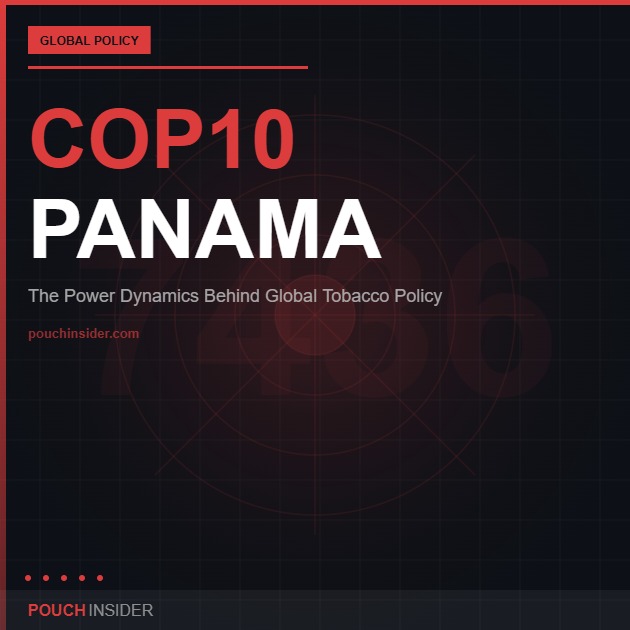

The tenth Conference of the Parties to the Framework Convention on Tobacco Control, held in Panama, provided an unusually clear view of the political dynamics that shape international tobacco control policy. The negotiations illustrated both the genuine public health commitments that motivate many participants and the ways in which ideological positions, industry influence concerns, and institutional interests can produce policy outcomes that do not straightforwardly serve the evidence-based harm reduction goals that the convention nominally pursues.
The treatment of novel and emerging tobacco products — electronic cigarettes, heated tobacco products, and nicotine pouches — was a central area of contention. A coalition of countries, primarily from the Global South and supported by some European delegations, pushed for frameworks that would treat these products as equivalent to cigarettes for regulatory purposes. A smaller number of countries, including several with developed harm reduction policies, advocated for differentiated treatment that would reflect the evidence on relative risk.
The restrictive coalition prevailed on most contested points. The final documents reflected a precautionary approach that treats alternative nicotine products with considerable suspicion and does not distinguish clearly between products with very different risk profiles. Advocates for harm reduction expressed significant disappointment with the outcome, arguing that the convention’s leadership had allowed ideological commitments to override the scientific evidence that its own expert bodies had generated.
The influence of tobacco control NGOs on COP10 was substantial and is worth examining. Several organisations with significant influence over the negotiating positions of their home governments have institutional interests in maintaining a maximalist anti-nicotine position regardless of the evidence. When these organisations are the primary interlocutors between governments and the scientific literature, the resulting policy positions may not accurately reflect what the research actually shows.
The harm reduction community has been left to work primarily through national regulatory processes rather than international frameworks, which means the coherence and consistency of harm reduction policy will depend on the political environment in individual countries rather than a coordinated global approach. For nicotine pouches, this means regulatory outcomes will continue to vary significantly between markets in ways that reflect politics as much as evidence.