

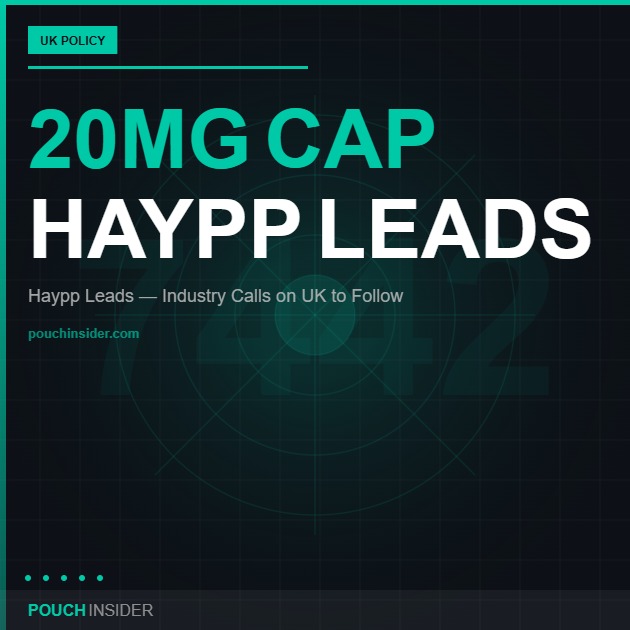

Haypp, the Scandinavian online nicotine pouch retailer with significant UK market presence, has announced a voluntary cap of 20mg per pouch on all products it sells in the UK market. The move is a deliberate piece of regulatory advocacy as well as a commercial decision: by establishing an industry-led strength standard before compulsory regulation arrives, Haypp is attempting to influence the shape of the regulatory framework while demonstrating that voluntary restriction is workable.
The announcement came with an explicit call for the UK government to legislate the same standard across all retail channels. This is notable because it represents a retailer actively soliciting regulation of its own market — a position that makes sense strategically if Haypp believes regulation is coming regardless and that an industry-shaped standard is preferable to one developed without industry input. By demonstrating compliance ahead of legal requirement, Haypp also signals to regulators and consumers that responsible actors in the market can meet a 20mg standard without significant business disruption.
The voluntarily cap removes high-strength products — those above 20mg — from Haypp’s UK offerings. These products represent a small proportion of total volume but are the primary focus of concern for regulators and public health advocates who argue that very high strength pouches serve no harm reduction purpose and present elevated risk of rapid nicotine dependence development.
For competitors who continue to sell above 20mg, Haypp’s move creates both commercial and reputational pressure. Retailers that maintain high-strength products after a market leader has voluntarily restricted will face questions about their approach to responsible product stewardship that are harder to answer in a pre-regulation environment than they might seem.
The UK government’s response to voluntary industry action will be telling. If ministers and officials engage with Haypp’s proposal as a constructive contribution to regulatory development, it suggests a policy process that is interested in evidence and industry engagement. If it is ignored or dismissed, the harm reduction community’s argument that proactive cooperation produces better outcomes than adversarial regulation will be harder to sustain.